Stunting interventions are often framed around the first 1000 days, from conception until a child’s second birthday. Some approaches go even further, emphasizing that maternal health before pregnancy is just as critical. Conceptually and evidently, this makes sense to suggest a system that focuses dominantly on three key entry points: prospective couples (calon pengantin), pregnant women, and children under-5. But what happens between these stages?
At Edufarmers, we’ve been rethinking how our stunting intervention—built around direct food support (One Day One Egg) and a maternal guidance tool (SAKTI chatbot) —— can evolve to stay relevant alongside the government’s newly launched MBG program and the realities on the ground.
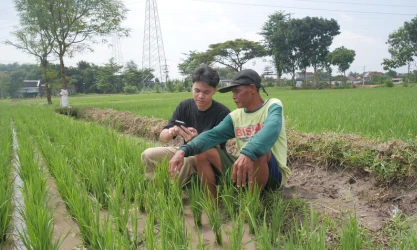
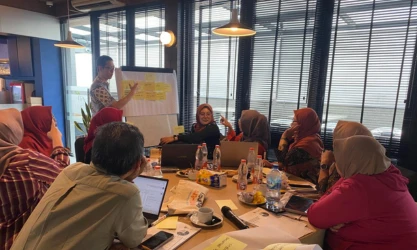
That pushed us back to the field, not just to meet mothers, but also the local government officials, puskesmas staff, and community health workers, trying to break down what really causes stunting and what’s actually happening. And an uncomfortable reality emerged. What looked like a clean pipeline of life-stage interventions on paper felt much more fragmented in practice. One question kept coming up:
“Where do women go when they are not yet pregnant—but no longer a prospective bride (calon pengantin)? And who is responsible for them?”
We often refer to this group as Wanita Usia Subur (WUS)—women in reproductive age (15-49) but not currently pregnant. This includes newly married couples waiting for their first pregnancy, or mothers in between pregnancies, before their second or third. In many ways, they are one of the largest groups in the system. And yet, they are easy to miss. N ot because they are excluded, but because they are not actively held anywhere. Not consistently tracked, not routinely screened, and not clearly owned by any part of the system.
The gap no one “owns”
This becomes more visible when we look at how the system is structured. Indonesia’s national framework already lays out a comprehensive continuum of care—from adolescents, to prospective couples, to pregnant women, to children under five. On paper, the sequence is complete. But in practice, it behaves less like a continuum and more like a set of separate segments.
The calon pengantin stage is primarily handled by the family planning sector, while pregnancy is managed through the health sector. Both are important, and both are relatively well defined. The problem is what happens in between.
The calon pengantin entry point, for example, is built on a strong idea: couples should receive screening and preparation before pregnancy, at least 3 months prior. But implementation often falls short of this intention. Many couples only register days before marriage, leaving little to no time for meaningful preparation. Some are already pregnant by the time they enter the system, which shifts the focus away from prevention. And even when risks are identified early at the calon pengantin stage, there is often no clear mechanism to follow up once they’re married as they are no longer the “program target”.
This gap matters because risks do not wait for pregnancy.
We often assume that the first pregnancy is the most critical. But second and third pregnancies can be just as vulnerable—sometimes more so. They are more likely to be closely spaced, less likely to involve deliberate planning & preparation, and often happen without any prior screening of nutritional status or underlying conditions. By the time a woman enters antenatal care, many of these risks are already in place. Assuming that learning from the first pregnancy carries forward on its own was, in hindsight, a bit naive. Each pregnancy comes with different conditions, different risks, and new knowledge gaps.
Visibility and connectivity
The actors are already there—midwives, community workers/cadres, and family planning workers. The missing piece is visibility and connecting the pieces.
Data is fragmented across institutions, often sitting in siloed digital applications that are not designed to speak to one another. Calon pengantin are tracked through Elsimil, managed by the family planning agency. Once pregnant, women move into health sector, previously recorded in ASIK, now gradually shifting to Sigizi, which also covers children under-5 database. There is technically a health sector app, Kescatin, that could also capture WUS, but during our visit, it seems not all puskesmas knew the app existed or utilizing it.
Responsibilities shift depending on how a woman is categorized at a given moment. Some actors hold detailed, by-name information, while others cannot access or act on it. Without shared visibility, no one owns the transition between life stages, meaning no early risk detection, and no follow-through.
A glimmer from one primary health center
One puskesmas we met actually showed that this is solvable. Using nothing more than a simple Google Form database, they began reaching out to all women aged 15-49 in their area, regardless of pregnancy status, and asked them to submit health screening data every month. It’s not a perfect system yet; follow-up after data is collected is still not clear, but it’s a perfect first step initiative. They still need support translating that dataset into a usable monitoring and decision-making tool for early intervention. And the next question is how to scale it, integrating it into the broader system, not just sustaining it within one health center.
Where this leaves us
Indonesia already has a strong policy foundation. The building blocks exist.
The gap is not about what to do—but how to connect what already exists.
This is something we are also grappling with in our own work at Edufarmers. Much of what we do today sits downstream: supporting pregnant women through nutrition guidance, providing food interventions, and helping families monitor child growth and access services. These are important pieces. But they also raise a question we have not fully answered yet:
How do we extend this continuity earlier, without overloading the system?
If you work in maternal health, nutrition, family planning, or data systems, we’d love to hear how you are thinking about this. Where have you seen this continuum actually work? How do we balance coverage and feasibility for community workers on the ground?
Because until we address this gap, we will keep finding ourselves responding to risks that were visible much earlier—but never quite captured and prevented by the system.